What is Katsuo's personality like?
Katsuo is a mischievous and energetic young boy who often gets into trouble. He likes playing baseball and is sometimes lazy with his homework.
How many episodes of Sazae-san have been made?
Sazae-san has had over 7,500 episodes made.
What is Sazae-san about?
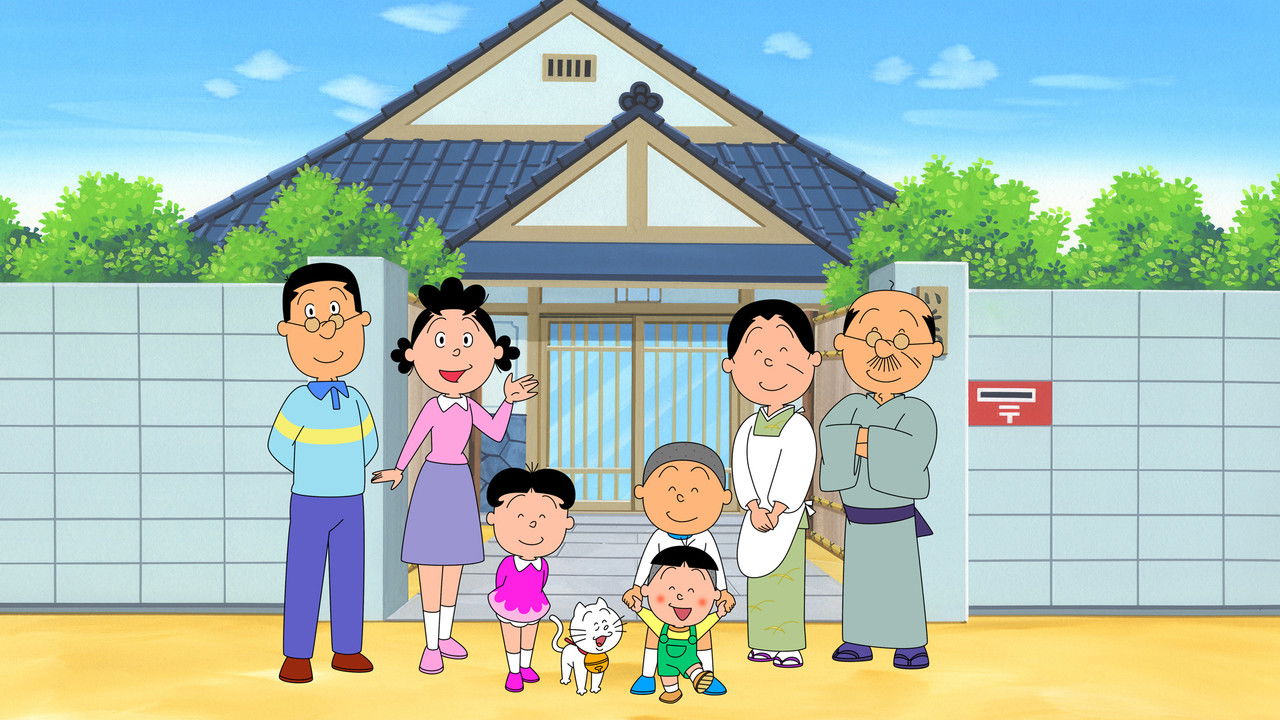
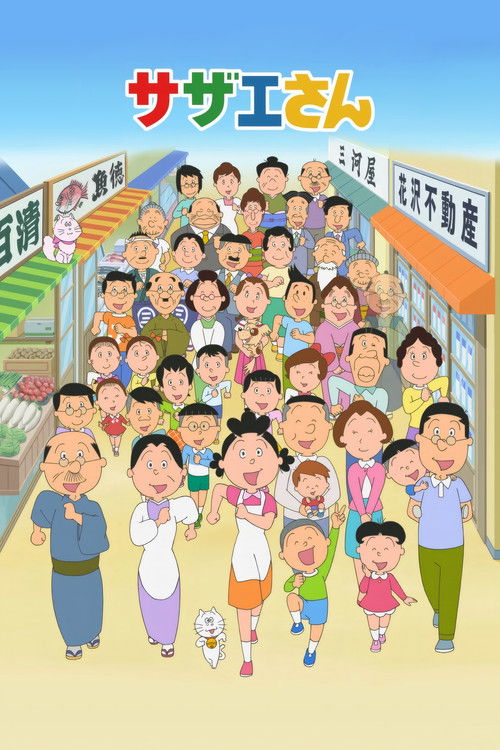
Sazae-san is about the daily lives of a typical Japanese family in the town of Sazae.
What is the current episode count for Sazae-san?
Sazae-san has over 7,500 episodes.
What is Sazae's personality like?
Sazae is a kind, cheerful, and somewhat ditzy housewife. She loves her family and often gets into silly situations.
How old is Tarao?
Tarao is around 11 years old.
Who are the main characters in Sazae-san?
The main characters are Sazae, her husband Masuo, her parents Namihei and Fune, her brother Katsuo, her son Tarao, and her sister Wakame.
What was the original format of Sazae-san?
Sazae-san started as a comic strip.
How old is Sazae?
Sazae is a young adult, around her mid-20s.
What is the family structure in Sazae-san?
It's a multi-generational family living together, including parents, children, and grandchildren.
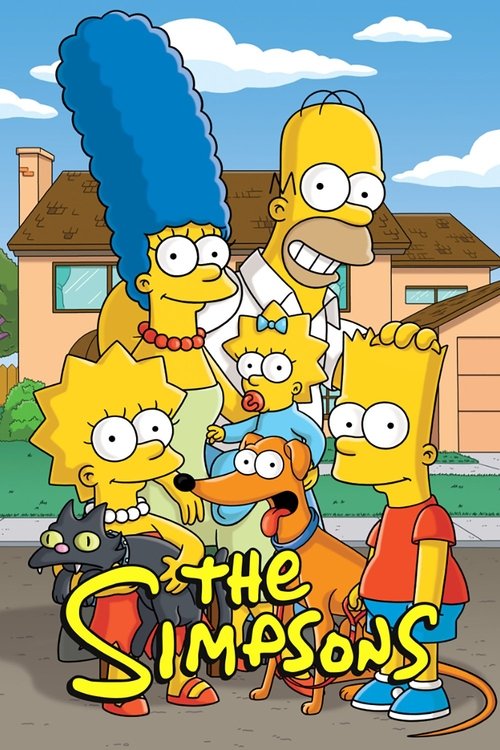
How does Sazae-san compare to other long-running animated shows like The Simpsons?
Sazae-san is similar to The Simpsons in that it's a long-running show about family life, but Sazae-san focuses more on traditional Japanese culture and values.
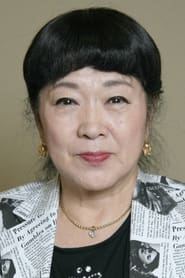
Who is the voice actor for Sazae-san?
Midori Kato has been voicing Sazae since the show began.
When did the Sazae-san anime first air?
The Sazae-san anime first aired in October 1969.
What is Masuo's personality like?
Masuo is a calm, kind, and responsible husband and father. He works in an office and tries to be a good role model.
What are the names of Sazae's family members?
Sazae's family members are her husband Masuo, her parents Namihei and Fune, her brother Katsuo, her sister Wakame, and her son Tarao.
Who created the Sazae-san manga?
The Sazae-san manga was created by Machiko Hasegawa.
What is Namihei's personality like?
Namihei is the patriarch of the family. He is a bit traditional, loves fishing, and sometimes grumbles, but he deeply cares for his family.
Has Sazae-san won any awards?
Sazae-san has received recognition for its longevity and cultural impact, including a Guinness World Record.
How long has Midori Kato been voicing Sazae-san?
Midori Kato has been voicing Sazae since the anime began in 1969.
When did the Sazae-san manga end?
The Sazae-san manga ended in 1974.
What is Sazae-san's Guinness World Record?
Sazae-san holds the Guinness World Record for the longest-running animated television series.
Why are the characters in Sazae-san named after sea creatures?
The characters are named after sea creatures as a nod to the sea and a way to give them memorable and fitting names.
Where does the Sazae-san family live?
The Sazae-san family lives in the modern-day town of Sazae, which is based on a neighborhood in Tokyo.
What is Tarao's personality like?
Tarao is an intelligent and curious young boy who is often the voice of reason among his younger peers. He enjoys learning and playing.
What is Wakame's personality like?
Wakame is a sweet and gentle young girl. She is Sazae's younger sister and is known for being polite and sometimes a bit shy.
What is the longest-running animated TV series in the world?
Sazae-san holds the Guinness World Record for the longest-running animated television series. It first aired in 1969 and is still producing new episodes today.
Is Sazae-san popular outside of Japan?
Sazae-san is not widely popular outside of Japan. While it is a beloved show in its home country, it has not achieved significant international recognition or viewership.
Does the show's animation style change over time?
Yes, the animation style of Sazae-san has evolved since its debut. While it maintains a classic look, there have been subtle updates and refinements to the animation over the decades to keep it current.
Can I watch Sazae-san with English subtitles?
Finding official English subtitles for Sazae-san can be challenging. While some fan-made subtitles may exist, official releases with English subtitles are not readily available.
What is the difference in writing style between early and modern Sazae-san episodes?
Early episodes of Sazae-san often focused on simpler, slice-of-life stories reflecting the societal norms of the time. Modern episodes continue this tradition but may incorporate more contemporary themes and humor while retaining the show's core family values.
How is Sazae-san viewed in Japan?
In Japan, Sazae-san is a cultural institution and is highly regarded. It is seen as a comforting and familiar program that celebrates Japanese family life and traditions across generations.
Does Sazae-san depict real-life events?
Sazae-san primarily depicts fictional everyday life scenarios for its characters. While it reflects the culture and atmosphere of Japan, it does not typically dramatize specific real-life events.
Has Sazae-san ever been released on home media like DVD or Blu-ray?
Yes, Sazae-san has been released on home media in Japan, including DVD sets. However, international releases on DVD or Blu-ray with widespread availability might be limited.
Why did the ending of Sazae-san change from eating a bean to rock-paper-scissors?
The ending of Sazae-san used to feature a character eating a bean, but this was changed to a rock-paper-scissors (janken) game. This change was made to offer a more interactive and universally understood conclusion to each episode.
What happens when the current voice actors for Sazae-san can no longer perform?
When a voice actor for Sazae-san can no longer perform, new actors are chosen to take over the roles. The show has a history of recasting roles due to the passing of actors, ensuring the series continues.
What is the difference between the Sazae-san manga and anime?
The Sazae-san anime is based on the original manga by Machiko Hasegawa. While the anime follows the general spirit and characters of the manga, it expands on the stories and has its own distinct narrative developments.
What is Sazae-san syndrome?
Sazae-san syndrome is not a recognized medical condition. It is likely a misinterpretation or a term used informally, perhaps relating to nostalgia or a longing for the simple life depicted in the show.
Do the voice actors for Sazae-san still sound the same?
While the core characters' voices are iconic, the voice actors have changed over the decades. New actors are cast to portray the characters, and while they aim to capture the essence of the original voices, there can be slight variations.
What is the purpose of the janken match at the end of Sazae-san episodes?
The janken (rock-paper-scissors) match at the end of Sazae-san episodes serves as a lighthearted and interactive way to conclude the show. It provides a simple, engaging moment for viewers before the credits roll.
Do cities compete to be featured in Sazae-san's opening?
There is no evidence to suggest that cities actively compete to be featured in Sazae-san's opening sequence. The locations shown are likely chosen for their representation of various aspects of Japanese life and scenery.
Does Sazae-san have any recurring guest characters?
Sazae-san focuses primarily on the Isono and Fune families and their immediate circle. While there are many supporting characters who appear regularly, there are not prominent recurring 'guest' characters in the traditional sense.
How has Sazae-san changed since it first aired?
Since its debut in 1969, Sazae-san has seen gradual changes in animation quality and storytelling to reflect evolving times. However, its core themes of family, daily life, and gentle humor have remained consistent.
Are there any new characters introduced in Sazae-san?
Yes, new characters are occasionally introduced in Sazae-san to reflect the passage of time and to introduce new dynamics to the family. These new additions help keep the series fresh while maintaining its established feel.
Is Sazae-san considered a family-friendly show?
Absolutely, Sazae-san is considered a very family-friendly show. Its gentle humor, focus on positive family values, and lack of mature content make it suitable for viewers of all ages.
Who voiced Tarao after Takako Sasuga passed away?
After the passing of veteran voice actress Takako Sasuga, who voiced Namihei Isono, the role of Tarao has been taken over by another actor. However, specific details on the actor change for Tarao are less prominent than for other main roles.
Where can I watch Sazae-san episodes online?
Watching Sazae-san online can be difficult for international audiences. Official streaming platforms might not carry it, and availability often depends on regional licensing.
What is the significance of Sazae-san's opening sequence?
The opening sequence of Sazae-san is significant because it showcases various real-life locations across Japan, often highlighting seasonal changes and cultural landmarks. It serves as a visual introduction to the country and a connection to the show's everyday setting.
What is the ending of a Sazae-san episode like?
The ending of a Sazae-san episode typically features a short, often humorous, segment. This can include the characters engaging in a simple activity, like the well-known rock-paper-scissors game, before the episode concludes.
What are some common themes in Sazae-san episodes?
Common themes in Sazae-san episodes include family relationships, daily routines, community interactions, and the simple joys and challenges of everyday life in Japan. The show often explores relatable domestic situations with warmth and gentle humor.
Are there any memorable catchphrases in Sazae-san?
Sazae-san is not particularly known for having prominent, repeated catchphrases in the way some other anime series do. The show's charm lies more in its character interactions and slice-of-life scenarios than in specific catchphrases.
Who is Machiko Hasegawa?
Machiko Hasegawa was a Japanese manga artist who created the comic strip 'Sazae-san'.