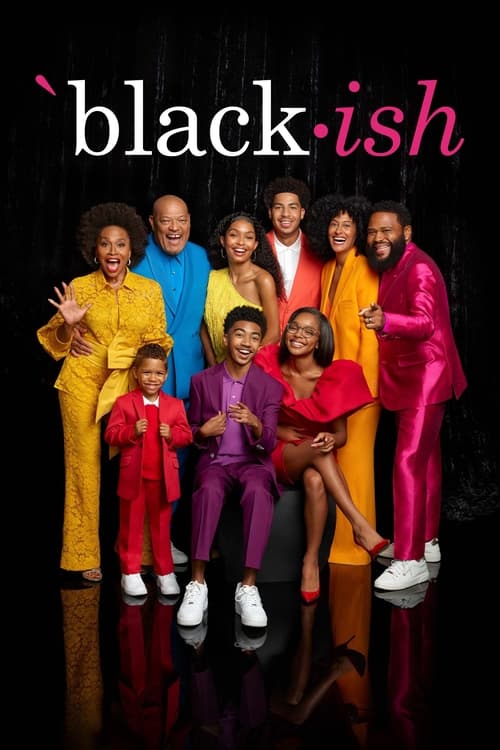
What is the main premise of Black‑ish?
Black‑ish centers on Andre “Dre” Johnson, a successful ad executive, and his wife Rainbow as they raise their kids while navigating cultural identity in a predominantly white, upper‑middle‑class neighborhood.
Who are the main characters?
The core cast includes Dre, his wife Rainbow, their daughter Zoey, son Junior, twins Jack and Diane, and later the younger son Devante. Supporting characters feature Dre’s mother Ruby and colleagues at the office.
What does the title Black‑ish mean?
The title reflects the Johnsons’ exploration of Black identity and pride within a mainstream, often white, environment, questioning what it means to be “black” in contemporary America.
Is Black‑ish a family‑friendly show?
Yes, it contains mild language and occasional social themes but remains suitable for mature teens and adults, avoiding graphic violence or explicit content.
How many seasons and episodes are there?
The series ran for eight seasons with a total of 176 episodes, concluding in April 2022.
Where is Black‑ish set?
The show takes place in a modern suburban home in Los Angeles, California, reflecting a typical upper‑middle‑class environment.
What happens to the kids in later seasons?
Zoey leaves for college in the spin‑off Grown‑ish, Junior starts college and faces romantic relationships, while Jack, Diane, and Devante deal with school, friendships, and identity.
Does Black‑ish have a spin‑off?
Yes, Grown‑ish follows the older kids in college, and Mixed‑ish explores the Johnsons’ childhood in the 1980s.
What’s the tone of the show?
It blends light, comedic moments with thoughtful dialogue, addressing political and social issues through a family lens.
Are there recurring themes?
Major themes include race, politics, family values, cultural pride, and the challenges of staying authentic while pursuing success.
Does Black‑ish have a final episode?
Yes, the eighth season concludes with a finale that reflects on the family’s journey and the broader cultural conversation.
Is the show available for streaming?
All seasons of Black‑ish are available on streaming platforms such as Netflix and Hulu, depending on your region.
Do the characters use social media?
Social media plays a role, with characters sharing updates, commentary, and occasionally using it to discuss cultural topics.
What is the relationship between Dre and Rainbow?
Their relationship balances career ambitions with mutual respect, often serving as the emotional core of the show as they navigate parenting and identity.
What is the episode structure?
Each 22‑minute episode follows a main story arc with subplots, ending with a brief “Thoughts” segment that offers reflective commentary.
What kind of humor does the show use?
The humor is situational and character‑driven, often using irony, cultural references, and witty dialogue to comment on social issues.
Is there violence in the show?
The series contains no graphic violence, making it safe for adult and teenage viewers.
Do the kids have their own storylines?
Yes, each child has distinct arcs: Zoey with high‑school and romance, Junior with academics and relationships, Jack with technology, Diane with social dynamics, and Devante with early teen issues.
Are there any notable guest stars?
The show has featured several high‑profile guests, including Laurence Fishburne as Dre’s father and Tracee Ellis Ross’s mother, adding depth to family dynamics.
What is the viewership like?
Black‑ish consistently ranked high in ratings for a comedy, with strong support from both Black audiences and broader viewers.
What is the main conflict?
The main conflict revolves around balancing professional success with cultural authenticity and maintaining family cohesion in a multicultural environment.
Does the show address social justice?
Yes, episodes regularly tackle issues such as voting, representation, and systemic bias, providing educational moments within humor.
Is there a central theme of romance?
Romance appears mainly in the relationships of the children, especially Zoey’s and Junior’s, but it remains secondary to the family’s cultural narrative.