
Servidor do player
Episódio
Temporada
Blue Orchestra

Blue Orchestra

20237
AnimaçãoDrama
Estreia
09/04/2023
País
Japão
Produções
Nippon AnimationNHKNHK Enterprises
No outono do seu terceiro e último ano do ensino fundamental, Hajime Aono, um prodígio do violino, parou de tocar violino por motivos pessoais. Mas foi também nesse ano que conheceu uma garota que lhe contou sobre um colégio com uma orquestra prestigiada. De repente, as engrenagens do relógio da vida de Aono começaram a girar novamente. Esta é a história de um drama juvenil que traz à tona a harmonia entre música e coração!

About

An anime about a violin prodigy who stops playing and then finds a new path.

In the third year of middle school, 15‑year‑old Hajime Aono quits the violin after his parents’ divorce and a scandal involving his father. A chance encounter with Ritsuko Akine, a girl with a raw, unpolished talent, sparks his curiosity. A mentor encourages him to join a prestigious high‑school orchestra. Through practice and competition, Hajime reconnects with music while navigating friendships, rivalries, and the pressure of excellence. The series blends coming‑of‑age drama with the emotional resonance of music, offering a heartfelt exploration of perseverance, self‑identity and the transformative power of harmony.

What to know

  • Main protagonist: Hajime Aono, a former violin prodigy.
  • Ritsuko Akine is a fellow student whose playing style differs from Hajime’s.
  • The story centers on an elite high‑school orchestra club.
  • Music is portrayed with authentic violin performances.
  • Episodes are 20‑min long; 37 episodes in season one.
  • The anime is based on a manga by Makoto Akui.
  • Voice cast includes Shōya Chiba (Hajime) and Ai Kakuma (Ritsuko).
  • Themes include perseverance, rivalry, and personal growth.

Watch if

If you enjoy character‑driven dramas that intertwine music and high‑school life, especially shows like *Your Lie in April* or *A Silent Voice*, Blue Orchestra offers a nuanced look at a violinist’s journey back to his passion.

Skip if

If you prefer fast‑paced action series or supernatural fantasy, this slow‑burn, music‑focused story might feel too contemplative.

family friendlyslow burnromance elementsmature themespsychological elementsuplifting tone
Story Premise
Hajime Aono, a 15‑year‑old violin prodigy, stops playing after his parents divorce. A chance meeting with Ritsuko Akine rekindles his interest, leading him to join an elite high‑school orchestra. The series tracks his return to music amid rivalries and personal challenges.
Main Characters
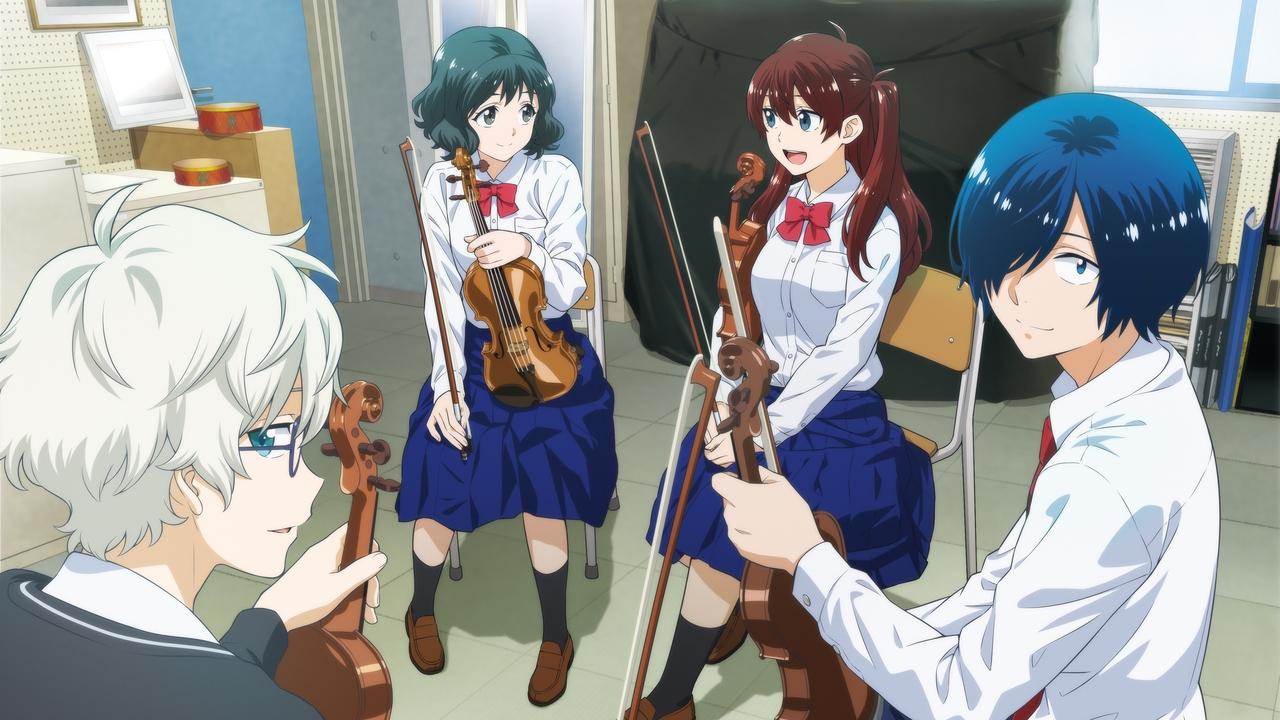
Hajime Aono is the former prodigy struggling with identity. Ritsuko Akine brings raw talent and a different perspective. Nao Saeki, a top‑scoring violinist, serves as a rival. Other members contribute diverse personalities to the orchestra club.
Music Production
Authentic violin performances are recorded by real musicians. Composer Akira Kosemura orchestrates the soundtrack, while the opening theme ‘Cantabile’ sets an optimistic tone. Sound design emphasizes the emotional impact of each piece.
Character Development
Throughout the series, characters confront insecurities, form alliances, and learn teamwork. Hajime’s journey from withdrawal to confidence mirrors the broader theme of finding one's own voice.
Manga Origins
The anime adapts Makoto Akui’s manga, originally serialized in Ura Sunday and MangaONE. The manga’s success, including a Shogakukan Manga Award, paved the way for the 2023 adaptation.
Animation Quality
Produced by Nippon Animation, the visuals blend realistic backgrounds with expressive character designs. Fluid animation captures the nuanced motion of violin playing.
Episode Guide
Season one comprises 37 episodes, each about 20 minutes long. The pacing allows detailed exploration of character arcs and musical performances.

FAQ

What is the ending of Blue Orchestra?
The anime concludes with the protagonists performing together at a major competition, symbolizing their personal growth. The final scenes emphasize the themes of harmony and perseverance without providing a definitive cliffhanger.
Who is the main female character?
Ritsuko Akine, a talented yet unconventional violinist, plays a key role in encouraging Hajime to return to music and becomes central to the story’s emotional arc.
Where is the story set?
The series takes place in a prestigious high school in Japan, featuring a renowned orchestra club that competes nationally.
What is the opening theme?
The opening track is ‘Cantabile’, performed by Novelbright, and it captures the hopeful tone of the series.
Is Blue Orchestra based on a manga?
Yes, it is adapted from Makoto Akui’s manga, which has been serialized in Ura Sunday and MangaONE since 2017.
How many episodes are in season one?
Season one consists of 37 episodes, each about 20 minutes long.
What age group is suitable for Blue Orchestra?
The series is family‑friendly and suitable for teens and adults who enjoy character‑driven dramas.
Are there any supernatural elements?
No, the story focuses on realistic music and school life without fantasy or supernatural aspects.
What is the main conflict in the story?
The central conflict revolves around Hajime’s struggle to regain his confidence in music while balancing friendships and rivalries within the orchestra club.
Who voices Hajime Aono?
Hajime is voiced by Shōya Chiba, a well‑known Japanese voice actor.
What is the ending theme?
The ending theme is ‘Yūsari no Canon’, performed by Yuika, providing a reflective tone for each episode.
Is there a second season?
A second season was announced and premiered in October 2025, continuing the story with new challenges.
Do the characters perform real violin parts?
Yes, professional violinists record the performances to ensure authenticity.
What is the tone of the series?
The tone is slow‑burn, emotional, and uplifting, focusing on personal growth and teamwork.
Do the characters have romantic relationships?
Romantic subplots are subtle; the series prioritizes friendship, rivalry, and self‑discovery.
Is the series suitable for younger audiences?
It is family‑friendly, but the mature themes of grief and personal failure may be more appropriate for older teens.
How does the music affect the plot?
Music is a catalyst for character development; each performance reflects a character’s emotional state and growth.
Who directed the anime?
Seiji Kishi directed the series, known for his work on other musical and school‑life anime.
What is the source material’s genre?
The manga is categorized as coming‑of‑age, drama, and music.
Does the story explore family relationships?
Yes, the protagonist’s strained relationship with his father and parents’ divorce are key backstory elements.
How does the show depict competition?
Competition scenes are intense yet grounded, highlighting both the pressure and camaraderie among peers.
Is there a theme song for each episode?
Only the opening and ending themes are used; episode‑specific songs are part of the soundtrack.
What are the main themes?
Themes include resilience, the healing power of art, identity, and the importance of collaboration.

Atores